Humbling: The Graceful Script That Elevates Your Brand Identity
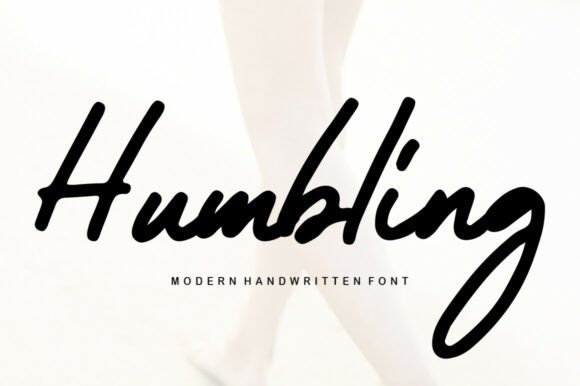
In a digital landscape often dominated by rigid sans-serifs and aggressive bold typefaces, there is a quiet revolution happening in the world of typography. It is called Humbling. This isn't just another decorative font; it is a beautifully balanced, graceful script designed to bring a sense of calm authority and elegance to your visual communication. When you look at its smooth curves, you aren't seeing random strokes but rather a deliberate architecture of flow that mimics the natural movement of a pen on high-quality paper.
For creators, entrepreneurs, and small business owners who have spent years trying to find a voice that stands out without screaming for attention, Humbling offers a solution. It bridges the gap between professional polish and personal warmth. Whether you are launching a new fashion line, designing an editorial layout for a lifestyle blog, or creating a wedding invitation suite, this script provides the finishing touch that transforms a good design into a memorable experience.
Why Designers Are Turning to Humbling for Fashion and Editorial Work
The fashion industry has always been about storytelling through aesthetics. However, modern consumers are increasingly skeptical of overly stylized or "loud" branding. They crave authenticity. This is where Humbling shines. Its definition by smooth curves allows it to convey luxury without the pretension often associated with traditional calligraphy. Unlike stiff, formal scripts that can feel dated, Humbling feels contemporary yet timeless.
Consider a scenario where a boutique clothing brand is rebranding. They need a logo that works on a website header, a hangtag, and a social media story. A complex script might lose detail when scaled down, while a standard serif might lack personality. Humbling strikes the perfect balance. The fluidity of the letters suggests movement—much like fabric flowing over a body. This makes it an ideal choice for:
- High-end fashion labels looking to establish a sophisticated identity.
- Editorial designers working on magazine covers or feature spreads that need to guide the reader's eye gracefully.
- Lifestyle bloggers who want their site headers to reflect a curated, aesthetic-driven lifestyle.
The beauty of Humbling lies in its versatility. It doesn't force itself upon the viewer; instead, it invites them in. When used for editorial designs, it handles headlines with a lightness that keeps the text readable while adding a layer of artistic flair. It tells the reader, "This content is worth slowing down to appreciate."
Practical Applications Beyond Fashion
While the connection to fashion is strong, limiting Humbling to just apparel would be a mistake. The font's inherent grace makes it applicable across a wide spectrum of creative and commercial sectors. Let's look at how different professionals are actually using this tool in their daily workflows.
Wedding and Event Planning
For event planners and stationery designers, the emotional tone of a project is paramount. Couples want invitations that feel intimate and exclusive. Humbling’s smooth curves naturally evoke a sense of romance and care. Imagine a wedding menu card where the names of the guests are written in this script. It adds a level of personalization that standard fonts simply cannot achieve. It signals to the guest that every detail has been thoughtfully considered.
Coffee Shops and Artisanal Brands
Small business owners in the food and beverage sector are constantly competing for attention. A local roaster or a craft bakery needs packaging that speaks to quality ingredients and handcrafted processes. Using Humbling on a coffee bag label or a cup sleeve creates an immediate perception of artisanal value. It suggests that the product inside was made with the same care as the lettering outside. This is not about being fancy; it is about signaling quality and attention to detail.
Digital Content and Social Media
In the realm of digital marketing, visual consistency is key. Freelancers and marketers often struggle to create cohesive graphics for Instagram stories or Pinterest pins. Humbling serves as a powerful accent font. You don't need to write entire paragraphs in script; using it for key phrases, pull quotes, or overlay text on images can break up the monotony of blocky layouts. For educators creating course materials or worksheets, a touch of Humbling can make learning resources feel less sterile and more engaging.
What Users Should Consider Before Choosing Humbling
Before you download or purchase a license for Humbling, it is important to understand how it fits into your specific workflow. Typography is not a one-size-fits-all solution, and knowing the limitations is just as important as knowing the strengths. Because Humbling is a script font defined by its fluidity, it requires a certain level of respect in terms of spacing and pairing.
Pairing is Everything
One of the most common mistakes users make is letting the script do all the heavy lifting. To get the best results, pair Humbling with a clean, neutral sans-serif or a classic serif body font. If you use it for long-form text, readability will suffer. Save the script for headlines, logos, short captions, and accents. Think of it as the jewelry you wear with a simple outfit—it enhances the look without overwhelming it.
Licensing and Commercial Use
If you are a freelancer or a small business owner, understanding the licensing terms is crucial. Some scripts are free for personal use only, meaning you cannot use them on client projects or products you sell. Always check the specific license agreement for Humbling. If you plan to use it on merchandise, such as t-shirts or tote bags, ensure you have a commercial license that covers physical goods. Ignoring this can lead to legal issues down the road.
Technical Compatibility
Modern web technologies have made it easier to use custom fonts, but compatibility still varies. If you are building a website, consider whether you need to host the font files yourself or if you can use a web font service. Test how Humbling renders on mobile devices. Sometimes, the intricate details of a script can become blurry or hard to read on smaller screens if the font weight is too thin. Adjusting the tracking (letter spacing) slightly can often improve legibility on digital platforms.
Real-World Outcomes of Using Humbling
When used correctly, the impact of Humbling goes beyond mere aesthetics; it influences how people perceive your brand. There is a psychological effect at play here. Soft, rounded shapes are generally associated with approachability and trust, while sharp angles can signal aggression or rigidity. By choosing Humbling, you are subtly communicating that your brand is human-centric and refined.
For instance, a graphic designer working on a portfolio for a holistic wellness coach might choose Humbling for the main title. This immediately aligns the visual identity with the values of peace, balance, and health. The client sees the font and feels a sense of calm before even reading the copy. Similarly, a publisher releasing a collection of poetry could use Humbling for chapter headings, enhancing the lyrical nature of the text.
The key takeaway is that typography is a functional tool, not just decoration. It guides the user's journey through your content. Humbling acts as a gentle guide, smoothing out the path and making the interaction feel more pleasant. Whether you are designing a logo for a startup, creating a resume for a job application, or formatting a newsletter for your community, the right font can elevate the perceived value of your work.
As you explore the possibilities of Humbling, remember that the goal is to create a harmonious visual language. Don't be afraid to experiment with different sizes and weights. Try mixing it with all-caps for contrast, or use it in italics for emphasis. The beauty of this script is that it adapts to your vision, provided you give it the space it deserves to breathe. In a world full of noise, sometimes the most powerful statement you can make is one of quiet grace.