Lemontide: A Friendly Script for Modern Designs
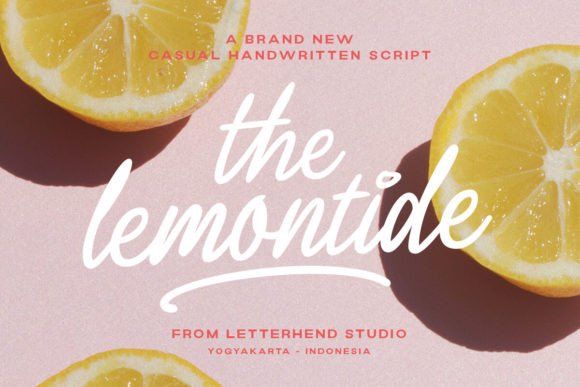
In a digital landscape saturated with rigid sans-serifs and overly formal serifs, finding a typeface that genuinely connects can feel like searching for a needle in a haystack. Lemontide emerges not just as another font file, but as a strategic tool for designers who understand that tone is everything. It is a casual script hand-written font that will add a touch of catchy to your designs, bridging the gap between professional polish and human warmth. When you need your audience to feel welcomed rather than instructed, this typeface offers a distinct visual voice that stands out without shouting.
The core appeal of Lemontide lies in its specific character traits. The letters are slightly wider than usual, giving it a modern yet comfortable appearance. This subtle expansion prevents the text from feeling cramped or aggressive, creating breathing room that invites the reader in. Whether you are crafting a brand identity for a local bakery or designing a newsletter for a community blog, the charming vibes of this font make it perfect for projects that require a friendly and approachable feel. It transforms standard copy into an experience that feels curated and personal.
Why the Hand-Written Aesthetic Matters Today
Consumers today are increasingly skeptical of content that looks mass-produced. There is a growing demand for authenticity, and typography plays a pivotal role in signaling that a brand cares about details. By choosing Lemontide, creators leverage the psychological impact of handwriting. Even when generated digitally, the slight irregularities and organic flow of a script suggest a human hand behind the message. This perception builds trust faster than cold, geometric fonts ever could.
Consider the scenario of a small business owner launching a new product line. They might struggle to differentiate themselves from larger competitors using generic templates. Integrating a font with such personality allows them to inject their unique story directly into the visual hierarchy. The "catchy" nature of the design helps capture attention in crowded social media feeds where users scroll rapidly. Instead of blending into the background, the text commands a moment of pause, encouraging the user to engage with the content rather than swiping past it.
Balancing Modernity with Comfort
One common pitfall with script fonts is the risk of appearing dated or difficult to read if overused. Lemontide avoids this trap through its deliberate structural choices. The slightly wider letterforms ensure legibility even at smaller sizes, which is crucial for mobile viewing. This balance allows professionals to use the font across various mediums—from large banners to fine print on receipts—without sacrificing clarity. The modern aspect ensures it fits seamlessly into contemporary layouts, while the comfort factor keeps the overall aesthetic inviting.
This versatility makes it an excellent choice for educators and bloggers who want to break up dense blocks of information. Imagine a lesson plan or a long-form article where the headers guide the reader through complex topics. Using a script like Lemontide for subheadings creates a natural rhythm, signaling a shift in topic while maintaining a cohesive, friendly tone. It simplifies the reading process by visually organizing content in a way that feels less academic and more conversational.
Unlocking Creativity with PUA Encoding
Technical limitations often stifle creativity, forcing designers to choose between beautiful aesthetics and functional utility. However, Lemontide is PUA encoded, which means you can access all of the amazing glyphs and ligatures with ease. This technical feature is a game-changer for freelancers and publishers who need precise control over their output. Public Use Area (PUA) encoding allows for the inclusion of special characters, alternate glyphs, and decorative ligatures that standard ASCII sets simply cannot support.
For marketers, this opens up possibilities for customizing headlines that tell a story. You aren't limited to basic A-Z characters; you can incorporate flourishes, swashes, and unique stylistic alternates that reinforce the brand's personality. If you are designing a wedding invitation or a holiday greeting card, these extra elements add a layer of sophistication that elevates the entire piece. The ability to mix and match these glyphs ensures that every project has a bespoke quality, saving time that would otherwise be spent manually adjusting kerning or adding images.
Practical Applications for Diverse Professionals
The utility of this font extends far beyond simple decoration. For entrepreneurs, it serves as a powerful branding asset. A logo or tagline set in a font with such distinct charm can instantly communicate the values of a company—perhaps one that prioritizes customer service, creativity, or community. It signals that the business is accessible and ready to listen.
- Bloggers and Content Creators: Use it to highlight pull quotes or introduce new sections, making long articles feel more digestible and engaging.
- Freelance Designers: Offer clients a premium look that differentiates their deliverables from standard template-based work, justifying higher rates.
- Educators: Create worksheets or presentation slides that feel less intimidating to students, fostering a positive learning environment.
- Publishers: Enhance book covers or magazine spreads with a tactile feel that mimics the joy of reading handwritten notes.
Making Smart Design Decisions
While Lemontide is a versatile tool, it is important to apply it with intention. No single font solves every problem. Its strength lies in its specific "friendly" and "approachable" vibe, which may not align with industries requiring strict authority or minimalism, such as high-end finance or medical technology. In those contexts, a more serious serif or clean sans-serif might be more appropriate. The key is to recognize where the emotional connection matters most.
When comparing options, consider the weight of the font against your layout. Because the letters are wider, they take up more horizontal space. This requires careful planning regarding column width and line length. If used excessively in body text, it can become tiring to read over long periods. Therefore, the most effective strategy is often to pair it with a neutral, highly readable sans-serif for the main content, using Lemontide strategically for emphasis, titles, and short phrases.
This hybrid approach maximizes efficiency. It allows you to maintain high readability standards while still injecting moments of personality that resonate with your audience. By solving the problem of "boring design" without compromising functionality, you create a better user experience. The result is a project that not only looks good but also communicates effectively.
Enhancing Communication Through Tone
Ultimately, typography is a form of communication. The words you choose convey the message, but the font conveys the attitude. Lemontide provides a vocabulary of attitudes that says, "We are here to help," "We are creative," or "We care." For professionals looking to strengthen their communication, understanding how to wield this tool is essential. It turns a static document into a dynamic conversation starter.
By integrating a font that adds a touch of catchy to your designs, you are investing in the emotional resonance of your work. Whether you are a hobbyist starting a new side project or a seasoned marketer managing a global campaign, the right typeface can simplify decisions and support goals. It removes the guesswork from setting the mood, providing a reliable foundation for your creative vision. As you explore your next project, consider how the charming vibes of Lemontide might transform your message from merely seen to truly felt.