Marginale: The Graceful Calligraphy Script for Timeless Design
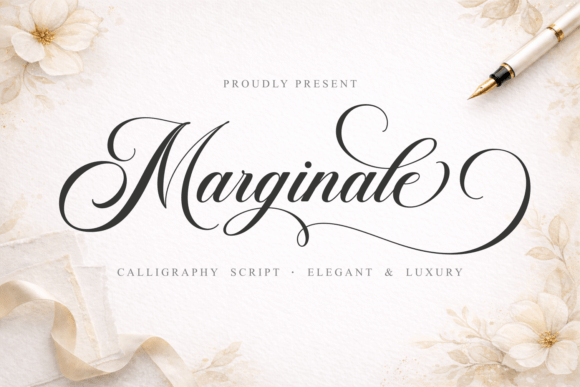
In the world of visual communication, few elements carry as much weight as typography. When a brand, a couple, or an artist seeks to convey luxury, elegance, and sophistication, they often turn to script fonts that mimic the fluid motion of hand-lettering. Among these options, Marginale stands out as a graceful calligraphy script that blends delicate curves with refined strokes, creating a timeless and luxurious feel. Whether you are designing wedding invitations, crafting a new brand identity, or simply looking to elevate a website's aesthetic, this font brings a sophisticated charm to every project.
For designers and business owners alike, the challenge is often finding a typeface that balances beauty with functionality. Many script fonts are difficult to read or lack the necessary versatility for professional use. Marginale solves this problem by offering flowing letterforms and stylish swashes that make it effortlessly beautiful and highly versatile. It is designed to be more than just a decorative element; it is a tool that can transform ordinary projects into true standouts.
Understanding the Need for Elegant Typography
Why does the choice of font matter so much? In an era where digital screens dominate our attention, the subconscious perception of quality is heavily influenced by design details. When a user sees a logo or reads an invitation, the typography sets the tone before a single word is processed. If the font feels cheap, clunky, or generic, the perceived value of the product or event drops immediately.
Designers often face specific challenges when trying to achieve a "high-end" look:
- Lack of Uniqueness: Standard serif or sans-serif fonts are ubiquitous. To create a memorable brand, one needs a distinctive voice.
- Readability vs. Style: Highly decorative scripts often sacrifice legibility, making them unsuitable for body text or important information.
- Technical Limitations: Many beautiful fonts require complex software or lack support for special characters, limiting their use across different platforms.
These hurdles can stall a project or result in a design that fails to resonate with the target audience. The goal is to find a solution that offers artistic flair without compromising on usability or technical compatibility.
How Marginale Addresses Design Challenges
This is where Marginale proves its worth as a practical solution. Its flowing letterforms and stylish swashes make it effortlessly beautiful, yet it remains structured enough to maintain clarity. By integrating Marginale into your designs, you address the need for a font that feels both exclusive and accessible.
The font's ability to blend delicate curves with refined strokes allows it to adapt to various contexts. Unlike rigid display fonts, Marginale mimics the natural rhythm of a pen on paper. This organic quality creates a connection with the viewer, evoking feelings of warmth, care, and personal touch. For weddings, this translates to invitations that feel like a love letter; for branding, it suggests a company that values craftsmanship and attention to detail.
Furthermore, the implementation of Marginale is streamlined for modern workflows. It is PUA encoded, which means you can access all glyphs and swashes with ease. This technical feature ensures that designers do not have to struggle with missing characters or complex workarounds to achieve the desired effect. You get a complete package that supports multilingual requirements, ensuring your message reaches a global audience without losing its stylistic integrity.
Practical Applications and Outcomes
The versatility of Marginale makes it suitable for a wide range of applications. Here is how different users can leverage this font to achieve specific outcomes:
Wedding Invitations and Event Planning
For couples planning their special day, the invitation is often the first tangible piece of their brand. Using Marginale for the names of the couple and key details adds a layer of romance and formality. The stylish swashes can be used to accentuate the date or location, while the main text remains legible. The outcome is an invitation suite that guests will want to keep as a memento, reflecting the elegance of the event itself.
Branding and Logo Design
Businesses in the fashion, beauty, lifestyle, and artisanal sectors often seek a logo that communicates premium quality. Adding Marginale to logos, labels, and branding materials instantly elevates the perceived value of the product. A coffee shop using this font on its packaging signals a focus on artisanal roasting, while a boutique clothing line suggests high-end tailoring. The result is a cohesive brand identity that stands out on crowded shelves and social media feeds.
Websites and Digital Content
While script fonts are sometimes avoided in web design due to readability concerns, Marginale excels when used strategically. It is perfect for headlines, quotes, and call-to-action buttons. Incorporating it into a website's hero section or using it for pull quotes can break up monotony and guide the reader's eye. When paired with a clean sans-serif for body text, Marginale provides a sophisticated contrast that enhances the overall user experience.
Implementation and Technical Considerations
To fully utilize the potential of Marginale, it is important to understand what comes in the package. When you acquire the font, you receive comprehensive font files including OTF and TTF formats. These formats ensure compatibility across most operating systems, from Windows and macOS to mobile devices and web servers.
The inclusion of multilingual support is a critical feature for modern designers. Whether you are localizing a campaign for international markets or simply need to include accented characters in your design, Marginale covers a broad spectrum of languages. This eliminates the need to switch between multiple fonts, maintaining consistency throughout your project.
When approaching a design project with Marginale, consider the following recommendations:
- Pairing Strategy: Because Marginale is a statement font, pair it with simple, neutral typefaces. Avoid competing scripts or overly ornate serifs. Clean geometric sans-serifs often provide the best balance.
- Spacing and Kerning: Handwritten styles require careful spacing. Adjust the tracking slightly wider than usual to ensure the delicate curves do not crowd each other, preserving readability.
- Color Contrast: To highlight the refined strokes, use high-contrast color combinations. Deep blacks against cream backgrounds or metallic accents can enhance the luxurious feel.
Conclusion: Elevate Your Design Today
Adding Marginale to your logos, labels, branding, invitations, websites, and quotes is a strategic move that boosts your designs and makes them a true standout. It bridges the gap between traditional elegance and modern utility. By choosing a font that respects the artistry of calligraphy while embracing the demands of digital technology, you ensure that your work resonates with audiences who appreciate quality.
Whether you are a seasoned graphic designer looking for a reliable script or a small business owner wanting to polish your image, Marginale offers the tools you need. Its graceful curves and refined strokes are ready to bring a sophisticated charm to your next project. With its robust file support and ease of use, there has never been a better time to incorporate this timeless script into your creative workflow.