Ocarina Camila: A Practical Evaluation of a Modern Handwriting Script
In the crowded landscape of digital typography, finding a script font that balances genuine handwriting aesthetics with technical robustness is often a challenge. Many typefaces sacrifice legibility for style or require complex workarounds to access their full character set. Ocarina Camila enters this space as a distinct alternative, positioning itself as a beautiful and super-chilled new handwriting font script designed for versatile application. For professionals, creators, and small business owners looking to inject personality into their projects without compromising on functionality, understanding the specific mechanics and use cases of Ocarina Camila is essential before adding it to a project workflow.
This evaluation focuses on the practical utility of Ocarina Camila, examining its design characteristics, encoding efficiency, and suitability for various professional environments. Whether you are designing a high-end wedding invitation or creating social media graphics for a lifestyle brand, the decision to use a specific typeface should be grounded in how well it performs under real-world conditions.
Design Characteristics and Visual Appeal
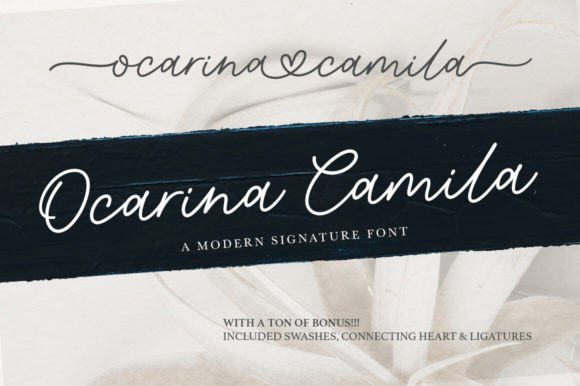
Ocarina Camila distinguishes itself through a relaxed, flowing aesthetic that mimics natural pen strokes. The font features sexy swashes that add a touch of elegance without feeling overly ornate or difficult to read. These decorative elements are not merely superficial; they serve to guide the eye and create a sense of movement across the page. The inclusion of connecting hearts adds a unique thematic layer, making the font particularly effective for projects requiring a soft, romantic, or affectionate tone.
The stylish ligatures are another critical component of the design. In many script fonts, ligatures are limited or inconsistent, leading to awkward spacing when letters connect. Ocarina Camila addresses this by offering a comprehensive set of pre-designed connections that ensure smooth transitions between characters. This consistency is vital for maintaining the illusion of a single, fluid handwriting motion, which is the hallmark of a successful script typeface.
The overall vibe of the font can be described as "super-chilled." It avoids the stiffness often found in formal calligraphy fonts while retaining enough structure to remain readable. This balance makes it suitable for a wide range of contexts, from casual branding to more formal announcements where a human touch is desired.
Technical Foundation: PUA Encoding
One of the most significant advantages of Ocarina Camila is its technical architecture. The font is PUA encoded (Private Use Area). In the world of typography, PUA encoding allows designers to map special glyphs, alternate characters, and complex ligatures to specific key combinations that do not conflict with standard ASCII characters.
For the end-user, this translates to accessibility and ease of use. Instead of struggling to find obscure symbols in a separate panel or relying on third-party plugins, users can access the amazing glyphs and ligatures directly within their design software using standard keyboard shortcuts or text input methods. This reduces the friction typically associated with applying advanced typographic features. When working under tight deadlines, the ability to quickly insert a connecting heart or a specific swash variant without breaking the workflow is a substantial practical benefit.
Practical Applications and Versatility
The marketing claims regarding the versatility of Ocarina Camila hold up under scrutiny. Because the font strikes a balance between decorative flair and readability, it functions effectively across a diverse array of mediums. However, success depends on selecting the right context for the design.
- Wedding Invitations: The connecting hearts and elegant swashes make this an ideal choice for nuptial stationery. The font conveys romance and personalization, which are central to the wedding industry.
- Logos and Branding: While scripts can sometimes struggle with scalability, the strong structure of Ocarina Camila allows it to work well for logos in specific niches, such as boutiques, cafes, or creative agencies.
- Apparel and Merchandise: For t-shirts and labels, the "chilled" aesthetic aligns well with streetwear and lifestyle brands. The ligatures ensure that text curves look natural even when wrapped around garment shapes.
- Editorial and News: The font is capable of serving as a display type for headlines in magazines or blogs. Its handwritten quality can break up the monotony of block text, drawing attention to key sections.
- Signage and Posters: Large-format printing benefits from the bold swashes, which remain visible and impactful at distance. However, care must be taken with body text, as scripts are generally less legible than sans-serif or serif fonts for long passages.
It is important to note that while the font is marketed for everything from letterheads to badges, the user must exercise judgment. Using a highly stylized script for dense blocks of information or legal disclaimers would undermine the effectiveness of the communication. The strength of Ocarina Camila lies in its role as a display font, used to capture attention rather than convey complex data.
Evaluation of Quality and Usability
From a quality control perspective, Ocarina Camila demonstrates a high level of polish. The curves are smooth, and the weight distribution appears consistent, preventing any jagged edges when rendered at high resolutions. This reliability is crucial for print production, where pixelation or uneven strokes can ruin expensive materials like invitations or signage.
The usability factor is significantly enhanced by the PUA encoding mentioned earlier. Designers often face compatibility issues when moving files between different operating systems or software versions. Because Ocarina Camila utilizes a robust encoding system, the risk of glyphs reverting to default characters or displaying incorrectly is minimized. This ensures that the final output matches the designer's intent, preserving the value of the investment.
However, no font is without limitations. The primary constraint of any script font is legibility at small sizes. If Ocarina Camila is scaled down too much, the intricate swashes and connecting hearts may blur together, reducing clarity. Additionally, the specific "handwritten" nature of the font implies a certain level of informality. It may not be the appropriate choice for corporate reports, financial documents, or sectors requiring a strictly formal tone. Professionals must weigh the emotional impact of the font against the need for neutrality in their specific field.
Target Audience and Workflow Integration
Who benefits most from Ocarina Camila? The font is particularly well-suited for freelancers, bloggers, and small business owners who need to produce high-quality assets without hiring a dedicated typographer. For a marketer creating a campaign for a beauty brand, the font offers immediate visual appeal that resonates with the target demographic. Similarly, educators or content creators looking to make their materials feel more approachable can leverage the friendly aesthetic of the typeface.
Entrepreneurs launching a product line will find the flexibility useful for creating cohesive branding across packaging, labels, and digital ads. The ability to easily access ligatures means that a solo creator can achieve a professional look that previously required multiple design iterations or specialized tools.
When integrating Ocarina Camila into a workflow, it is advisable to pair it with a neutral sans-serif or serif font. This contrast creates hierarchy and ensures that the core message remains clear. For example, using Ocarina Camila for a headline paired with a clean geometric sans-serif for the body copy creates a balanced composition that is both stylish and functional.
Long-Term Value and Conclusion
The long-term value of a font license extends beyond the initial purchase price. Ocarina Camila offers durability through its adaptability. As trends shift, the "super-chilled" and modern handwriting style remains relevant because it feels authentic rather than dated. Unlike overly trendy fonts that may look passé in a few years, the classic influence of the swashes and ligatures gives Ocarina Camila a timeless quality.
For professionals seeking a tool that enhances creativity without introducing technical headaches, Ocarina Camila represents a solid option. Its combination of aesthetic charm, technical encoding efficiency, and broad application range makes it a valuable asset in a digital toolkit. While it requires thoughtful application to maintain legibility and appropriateness, its strengths far outweigh its limitations for the intended use cases.
Ultimately, the decision to adopt Ocarina Camila should be based on the specific needs of the project. If the goal is to convey warmth, creativity, and a personal touch, this font delivers on those promises effectively. By understanding its capabilities and constraints, users can leverage Ocarina Camila to elevate their designs and communicate their message with greater impact.