Why Maryland Script Is the Missing Piece in Your Design Toolkit
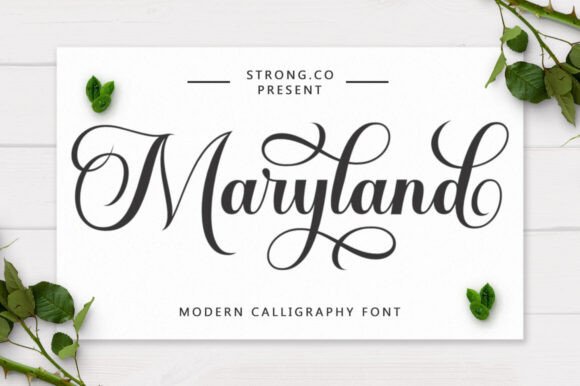
If you have spent any time looking at modern design trends, you know that standard fonts often feel a bit too rigid. They get the job done, but they rarely capture attention or evoke emotion. This is where Maryland steps in as a fresh, modern new script with a handcrafted calligraphy style. It is not just another decorative typeface; it is a tool designed to bring personality to your projects without sacrificing readability.
Many designers and business owners overlook the power of a well-chosen font until it is too late. They might grab a generic cursive font from a free library, only to find that it looks cheap or fails to load correctly on mobile devices. When you choose Maryland, you are selecting a typeface that features decorative characters and a dancing baseline, making it very pretty for invitations such as greeting cards, branding materials, business cards, quotes, posters, and more. However, simply downloading the file is not enough. To get the best results, you need to understand how to use it effectively and avoid common pitfalls that can ruin your project's aesthetic.
The Hidden Challenges of Using Script Fonts
One of the most frequent mistakes creators make when working with script fonts like Maryland is ignoring the importance of spacing. Because this font has a dancing baseline and unique calligraphy flourishes, the default kerning (the space between letters) often needs adjustment. If you leave the text exactly as it comes out of the font manager, words might look cramped or disconnected, undermining the elegant handcrafted style you intended.
This oversight can significantly affect the quality of your final output. A greeting card with poorly spaced text looks unprofessional, while a business card with tight lettering becomes difficult to read. The decorative characters are meant to flow naturally, but if the spacing is off, the "handcrafted" illusion breaks, and the font starts to look like a computer-generated mess rather than art.
To avoid this, always preview your text at the actual size it will appear in the final product. Zoom in and check the connection between letters. If the baseline feels too erratic, try increasing the tracking slightly. This small adjustment can make the difference between a design that feels polished and one that feels rushed. Remember, the goal is to enhance the message, not distract from it.
When Not to Use Maryland Script
Another critical misunderstanding involves the application of script fonts in body text. While Maryland is beautiful for headlines, quotes, and short phrases, it is rarely suitable for long paragraphs. The decorative characters and the varying height of the baseline can cause eye fatigue when reading large blocks of text. Readers may struggle to follow the line of text, leading to poor user experience and reduced engagement.
Entrepreneurs and marketers often fall into this trap because they want every element of their poster or landing page to be stylish. They might try to set an entire paragraph in Maryland thinking it adds a cohesive look. Instead, it creates a visual barrier. The solution is simple: pair it with a clean, neutral sans-serif or serif font for body copy. Let Maryland shine as the accent, drawing the eye to the key information, while the supporting text remains legible and easy to scan.
- Use for: Headlines, logos, invitations, social media graphics, and short quotes.
- Avoid for: Long articles, terms and conditions, dense paragraphs, and navigation menus.
Evaluating Quality Before You Buy or Download
Not all script fonts are created equal. Some offer limited character sets, meaning they lack special symbols, ligatures, or alternate glyphs that give a font its true charm. When evaluating Maryland or similar typefaces, check the character map before committing. A high-quality script should include multiple alternates for common letters, allowing you to create unique combinations that look even more hand-drawn.
Ignoring this detail can lead to repetitive designs. If your font only has one version of the letter "a," your brand materials will look monotonous. By choosing a font with a rich set of decorative characters, you gain the flexibility to customize your text and ensure it stands out. This is particularly important for branding materials and business cards where uniqueness is paramount.
Furthermore, consider the technical aspects of the font file. Does it support OpenType features? Can it handle different languages if you plan to expand your audience? These questions matter because a font that looks great on your screen might fail in production if it lacks the necessary encoding or file structure. Always verify compatibility with your design software and printing requirements to prevent costly rework later.
Practical Tips for Maximizing Impact
Once you have secured a high-quality version of Maryland, focus on how you integrate it into your workflow. Beginners often try to force the font to do too much. Instead, let it breathe. Give it plenty of white space around it. The dancing baseline works best when it has room to move without competing with other elements.
For those creating invitations or greeting cards, experiment with layering. Place Maryland over a subtle texture or a soft watercolor background to enhance the handcrafted feel. However, ensure there is sufficient contrast between the text and the background. If the colors are too similar, the decorative details will disappear, rendering the font ineffective.
- Check Contrast: Ensure the text color pops against the background.
- Limit Usage: Stick to one or two lines of script per design.
- Test Print: Always print a sample to see how the ink interacts with the paper texture.
- Pair Wisely: Combine with a simple, readable font for balance.
By following these guidelines, you can avoid the frustration of a failed design and achieve a professional result that truly reflects your vision. Whether you are a freelancer creating a portfolio, a blogger designing a header, or a small business owner crafting a logo, understanding the nuances of Maryland will elevate your work.
The right font choice is not just about aesthetics; it is about communication. When used correctly, Maryland conveys warmth, creativity, and attention to detail. It tells your audience that you care about the little things. But remember, even the most beautiful script can fail if it is applied incorrectly. Take the time to learn its strengths, respect its limitations, and you will find that it becomes an indispensable part of your creative arsenal.
Don't let poor execution hide the potential of this amazing typeface. With a little practice and a mindful approach to spacing, pairing, and usage, you can create designs that are both stunning and functional. Start by testing Maryland on a small project today, observe how it responds to your adjustments, and watch your designs transform from ordinary to extraordinary.