Hatchery: A Detailed Evaluation of the Dazzling Script Font
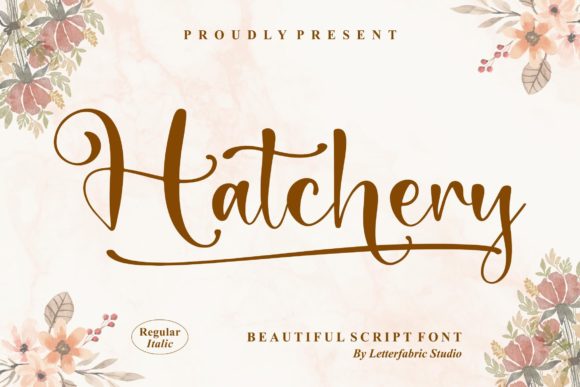
In the landscape of digital typography, selecting the right typeface is rarely a matter of simple preference; it is a strategic decision that impacts readability, brand perception, and overall user experience. Hatchery has emerged as a notable option for designers seeking a specific aesthetic: a dazzling script font that balances neat craftsmanship with high-level detail. Unlike standard cursive fonts that often prioritize speed over structure, Hatchery is designed with an eye for intricate glyphs and fluid connections. This article provides an objective analysis of the font, exploring its technical specifications, practical applications, and the considerations necessary before integrating it into a design project.
Understanding the Core Characteristics of Hatchery
To evaluate whether this typeface aligns with your goals, one must first understand its fundamental nature. Hatchery is classified as a script font, but it distinguishes itself through a "neatly crafted" approach. Many scripts in the market lean towards chaotic, handwritten styles that can be difficult to read at smaller sizes or in body text. In contrast, Hatchery maintains a structured legibility while retaining the organic flow of handwriting. The font is highly detailed, meaning that individual strokes contain nuances that mimic the pressure and texture of a real pen or brush.
A critical technical feature of Hatchery is its encoding method. It utilizes PUA (Private Use Area) encoding. In standard Unicode, there are limited slots for special characters, ligatures, and stylistic alternates. By utilizing the PUA space, the font creator has allocated a vast array of additional glyphs without conflicting with standard character sets. This allows users to access a comprehensive library of amazing glyphs and ligatures. For a designer, this means greater flexibility in creating custom looks without needing to manually adjust kerning pairs or use complex OpenType features that might not be supported by all software environments.
Reasons for Interest and Practical Benefits
Designers often turn to specialized scripts like Hatchery when a project requires a touch of elegance or personalization that sans-serif or serif fonts cannot provide. The primary benefit of using Hatchery lies in its ability to convey a sense of bespoke quality. Because the font is so detailed, it adds visual weight and texture to headlines, logos, and invitations. When used correctly, it can elevate a design from generic to premium.
- Enhanced Visual Storytelling: The intricate details allow the font to carry more narrative weight than simpler scripts.
- Expanded Character Set: The PUA encoding ensures access to a wide variety of alternate letters and decorative elements, reducing the need for external graphic assets.
- Ligature Support: The inclusion of ligatures helps smooth out the connection between letters, preventing awkward gaps or collisions that often plague script fonts.
- Craftsmanship Aesthetic: The "neatly crafted" nature makes it suitable for projects that value precision alongside artistic flair.
Tradeoffs and Technical Considerations
While the benefits are significant, a balanced evaluation requires acknowledging the tradeoffs associated with PUA-encoded fonts. The most immediate consideration is compatibility. Because PUA characters exist outside the standard Unicode range, they may not display correctly on all operating systems, browsers, or mobile devices unless the font file is properly embedded. If a user views a document containing Hatchery on a device where the font is not installed, the system will default to a fallback font, potentially breaking the intended design.
Furthermore, the reliance on PUA encoding can complicate workflows involving searchability or accessibility. Text selected from a PUA-encoded font might not copy and paste accurately into other applications if those applications do not recognize the specific code points. Designers must also consider the file size; a font packed with hundreds of detailed glyphs and ligatures may result in larger file sizes compared to more streamlined typefaces, which could impact page load times on the web.
Implementation Challenges
When implementing Hatchery, particularly for web use, developers must ensure that the CSS includes the correct `@font-face` declarations to handle the non-standard characters. Additionally, because the font is highly detailed, it may suffer from rendering issues at very small point sizes. The fine lines that give the font its character can blur or disappear on low-resolution screens, leading to illegibility. Therefore, setting minimum size constraints is a prudent measure to maintain the integrity of the typeface.
Situations Where Hatchery is a Strong Fit
Determining the right context for Hatchery involves matching the font's strengths to the project's requirements. This typeface is an excellent choice for print media where resolution is high and file size is less of a concern. It shines in scenarios such as wedding invitations, luxury packaging, and editorial headers where the goal is to create an immediate impression of sophistication.
In branding contexts, Hatchery works well for logotypes or wordmarks that need to appear handcrafted yet professional. Its neat structure prevents it from looking messy, making it suitable for businesses that want to project creativity without sacrificing clarity. For example, a boutique bakery, a calligraphy studio, or an artisanal craft shop could find strong alignment with this font's personality.
- High-Resolution Print Projects: Invitations, certificates, and posters where every glyph detail is visible.
- Branding and Logos: Short text elements where the unique style defines the identity.
- Decorative Headlines: Web or print headlines where the text is large enough to showcase the ligatures and flourishes.
- Artistic Illustrations: Projects where the text acts as a graphical element rather than pure information delivery.
When Alternatives May Be Worth Considering
Despite its qualities, Hatchery is not a universal solution. There are situations where its specific characteristics become liabilities. If the project involves long-form body text, Hatchery is likely unsuitable. The high level of detail and the script style can cause reader fatigue, making it difficult to scan paragraphs of content. In these cases, a clean sans-serif or a highly legible serif would be a more functional choice.
Additionally, for projects requiring broad cross-platform compatibility without embedding complex font files, a standard Unicode-based script font might be safer. If the target audience includes users on older devices or within restrictive corporate environments that block custom font embedding, the PUA encoding of Hatchery could lead to broken layouts. Similarly, if the project demands strict adherence to accessibility standards regarding text selection and screen readers, the non-standard encoding may present hurdles that require extra development effort to resolve.
Practical Decision-Making Insights
Before committing to Hatchery, designers should conduct a practical test. Create a sample layout that mimics the final output environment. Check how the ligatures behave across different line lengths and see if the PUA characters render correctly on the intended target devices. Evaluate the contrast between the font and the background to ensure the detailed strokes remain distinct.
It is also wise to compare Hatchery against similar fonts in the same category. Look for alternatives that offer similar "dazzling" aesthetics but perhaps with better standard Unicode support or lighter file weights. The decision should ultimately rest on whether the unique visual appeal of Hatchery justifies the potential technical overhead. If the project is a static print piece or a controlled digital presentation, the tradeoffs are minimal. However, for dynamic, responsive web applications with diverse user bases, the risks may outweigh the rewards.
In conclusion, Hatchery represents a sophisticated tool in the typographer's arsenal. Its combination of neat crafting, high detail, and extensive glyph availability via PUA encoding offers unique possibilities for creative expression. However, its success depends entirely on the context of its application. By carefully weighing the benefits of its aesthetic against the technical constraints of its encoding, designers can make informed decisions that enhance their work without compromising functionality.